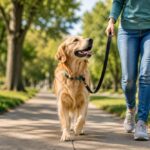
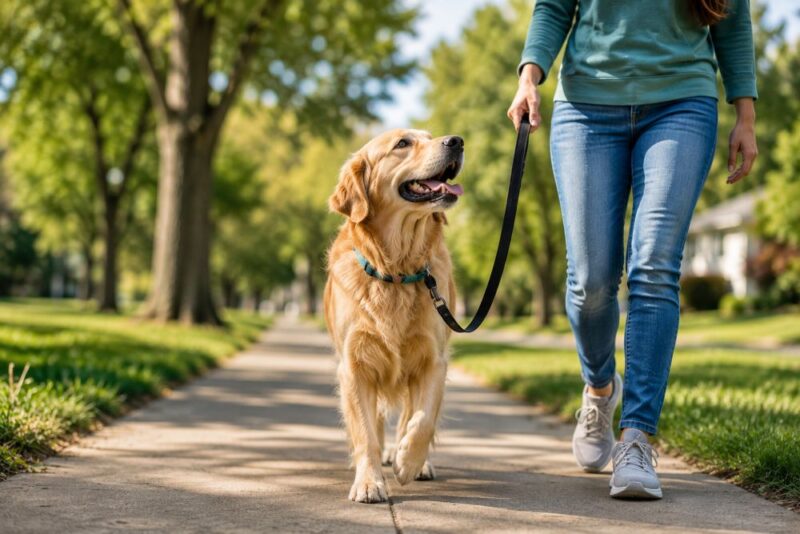
A daily walk can be more than a bathroom break or a way to burn energy. It is one of the easiest places to practice attention, leash manners, calm behavior, and communication because the real world provides distractions.
For owners who want extra structure, Off Leash K9 Training Dayton is one professional resource to consider. Whether you train independently or work with a trainer, the goal is the same: help your dog make better choices while everyday life happens around them.
You do not need to turn every walk into a strict obedience routine. A few thoughtful repetitions can make ordinary outings more useful while leaving plenty of time to explore.
Start Before You Leave the House
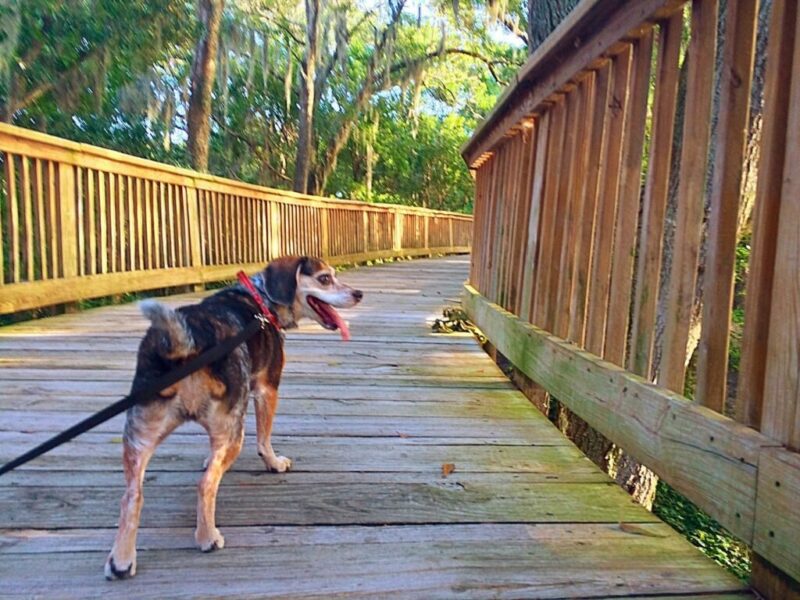
Many difficult walks begin before the front door opens.
Your dog sees the leash, becomes excited, rushes toward the door, or begins pulling before you step outside. Repeated daily, that excitement becomes part of the walking habit.
Practice calm behavior before leaving.
Pick up the leash without immediately going outside. Wait for your dog to settle before clipping it on. Ask for a sit or pause at the door. If your dog rushes through, calmly reset.
The goal is not perfect stillness. You are teaching your dog that calm choices help the walk begin.
Reward the Leash Behavior You Want
Leash pulling often continues because pulling works.
A dog smells something interesting, tightens the leash, and eventually reaches it. From the dog’s perspective, pulling created access to something valuable.
Change that pattern.
When the leash is loose, keep moving. Reward your dog with praise, food, or permission to sniff. When the leash becomes tight, slow down, stop, or calmly change direction.
You do not need to demand a competition-style heel for the entire walk. Your dog can explore while still learning that constant tension is not the normal way to move forward.
Use Sniffing as a Reward
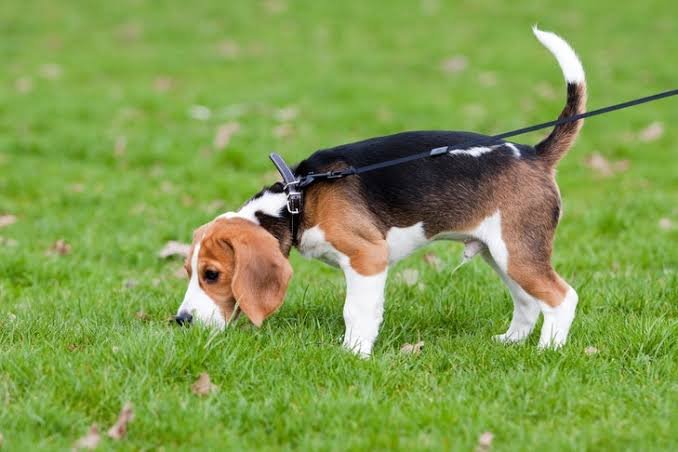
Owners sometimes think training and sniffing are opposites.
They are not.
Sniffing is naturally rewarding for many dogs, which makes it useful during training. Ask for a few loose-leash steps, a check-in, or a simple sit. Then release your dog to investigate an interesting area.
This creates a practical pattern: respond first, then explore.
Using the environment as a reward can reduce dependence on treats. Food remains helpful, especially for new skills, but access to smells, movement, and interesting spaces can also be valuable.
Practice Attention Before You Need It
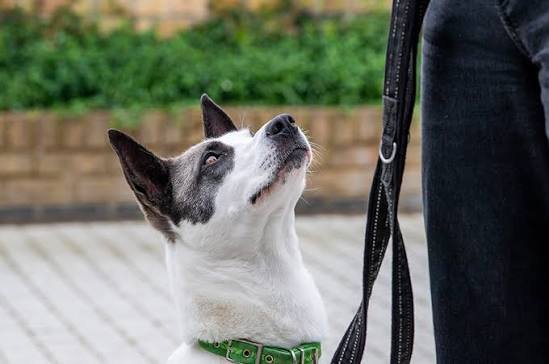
Do not wait for a squirrel, cyclist, dog, or exciting person to appear before asking your dog to pay attention.
Practice check-ins during easy moments.
Say your dog’s name while the sidewalk is quiet. Reward them for turning toward you. Change direction and encourage them to follow. Pause near a driveway and ask for a simple cue.
These easy repetitions create a history of successful responses.
When something distracting appears, your dog is more likely to recognize the pattern. Training is harder when attention is requested only after the dog becomes intensely focused elsewhere.
Give Distractions More Distance
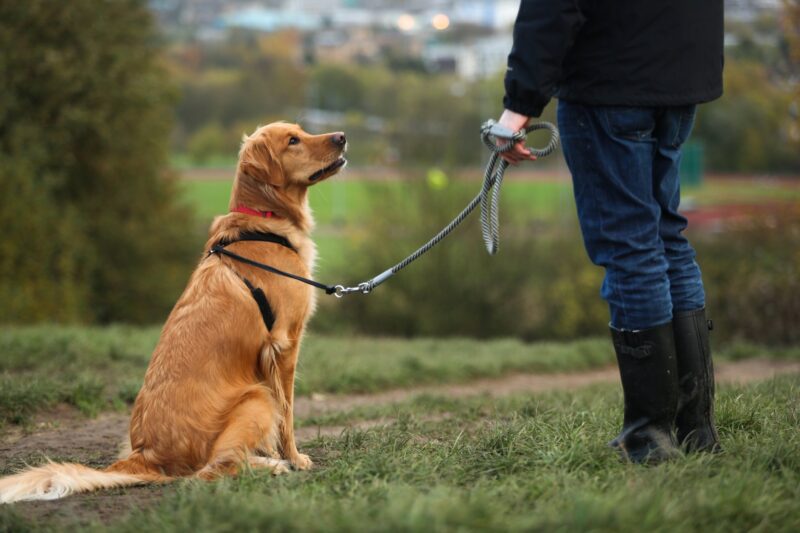
Distance can change a difficult situation quickly.
Imagine your dog calmly notices another dog across the street but begins pulling at ten feet. Working closer is not automatically better. It may make the exercise too difficult.
Start where your dog can still think and respond.
Reward a glance back toward you. Practice loose-leash walking. Change direction if needed. As your dog’s responses become more consistent, you can gradually work in slightly more challenging situations.
The objective is not to see how close your dog can get before losing control. The objective is to practice successful behavior.
Keep Training Moments Short
A walk does not need to become thirty minutes of nonstop commands.
In fact, shorter training moments are often easier for both dog and owner.
Practice a few steps of loose-leash walking, then allow sniffing. Ask for one sit at a corner. Practice a recall-style turn toward you while using a safe leash. Reward a calm pause before crossing the street.
Then continue the walk normally.
Short repetitions keep training clear and prevent frustration. They also make consistency realistic because you do not need a separate hour to work on manners.
Notice Small Improvements
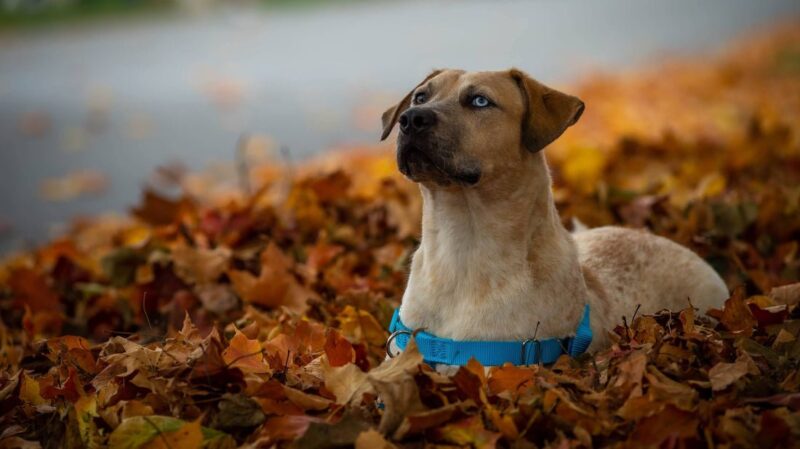
Progress on walks is not always dramatic.
A dog who previously pulled for the entire block may offer ten loose-leash steps. A dog who barked immediately at another dog may pause and look at you first. A dog who ignored their name outdoors may begin responding in quieter areas.
Those changes matter.
Measure progress against your dog’s previous behavior rather than expecting instant perfection. Different environments, energy levels, weather conditions, and unexpected distractions can all affect performance.
Reliable behavior develops through repetition across many ordinary walks.
Let Your Dog Be a Dog
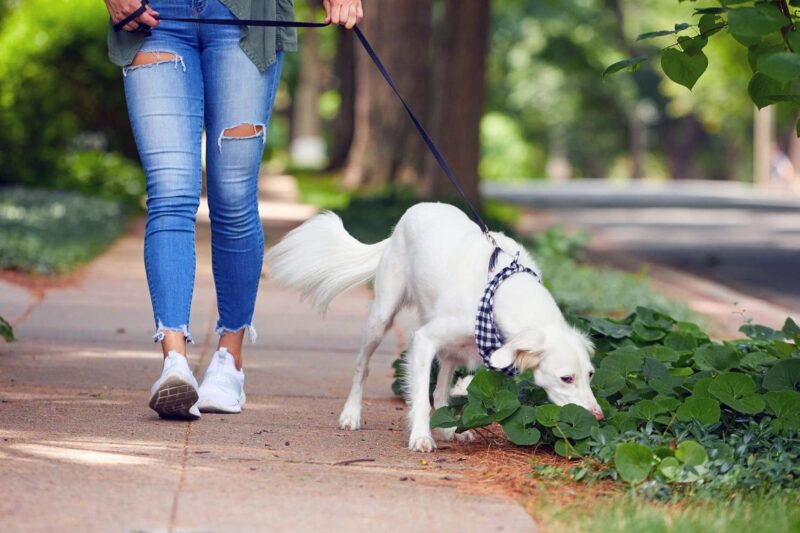
Training should make walks easier, not remove everything enjoyable about them.
Dogs need opportunities to sniff, explore, move, and gather information from the environment. A useful walk can include both structure and freedom.
You might begin with a calm doorway exit, practice loose-leash walking for part of the route, pause for a few attention exercises, and then give your dog time to sniff.
Balance makes the routine sustainable.
When dogs understand when to focus and when they are free to explore, walks can become clearer and less frustrating for everyone.
Make the Walk Part of Everyday Training
The most useful dog training often happens outside formal sessions.
Doorways, sidewalks, street corners, passing dogs, interesting smells, and quiet pauses all create opportunities to practice communication. You do not need dozens of commands or complicated exercises.
Focus on a few behaviors that make daily life easier: calm exits, a looser leash, reliable attention, and the ability to recover after excitement.
Practice them when conditions are manageable. Reward the choices you want to see again. Increase difficulty gradually.
Over time, ordinary walks stop being something you simply get through. They become regular opportunities to help your dog build skills that matter in the real world.