
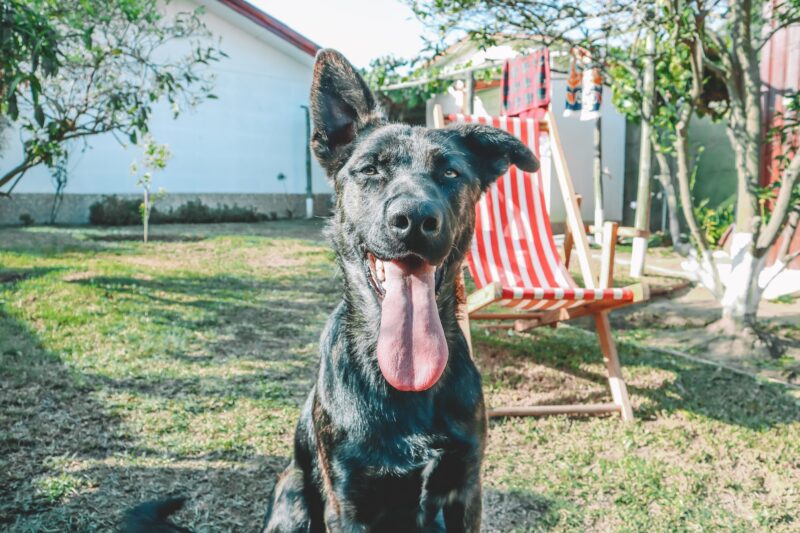
A deck can be one of the best parts of a home for a dog. It gives them a place to sit in the sun, watch the yard, and spend time with the family. It can also hide problems that are easy to miss: boards that run hot in summer, railing gaps wide enough for a small dog to slip through, or a planter full of plants that are toxic if chewed. This guide covers how to plan, build, and maintain a deck that works for dogs without giving up durability or good looks.
Table of Contents
- Why Dog-Friendly Deck Design Matters
- Choosing Materials That Hold Up to Paws and Weather
- Managing Surface Temperature for Paw Safety
- Railings, Stairs, and Escape Routes
- Plants, Chemicals, and Other Hazards
- Building in Shade, Water, and Rest Areas
- A Simple Maintenance Routine
- Frequently Asked Questions
- Keeping the Deck a Place Your Dog Wants to Be
Why Dog-Friendly Deck Design Matters
Most deck problems for dogs come from a few predictable places. Planning for them early costs far less than fixing them later. When you design or upgrade a deck with a dog in mind, focus on these areas:
- Surface comfort: boards should not burn paws in summer or become slippery when wet.
- Containment: railings, stairs, and gaps should keep a dog from falling, squeezing through, or jumping off.
- Toxin control: plants, fertilizers, and cleaning products should be kept away from where your dog sleeps and plays.
- Shelter: there should be shade, fresh water, and a cooler place to rest.
- Upkeep: the materials and finishes should be ones you will actually maintain over time.
Choosing Materials That Hold Up to Paws and Weather
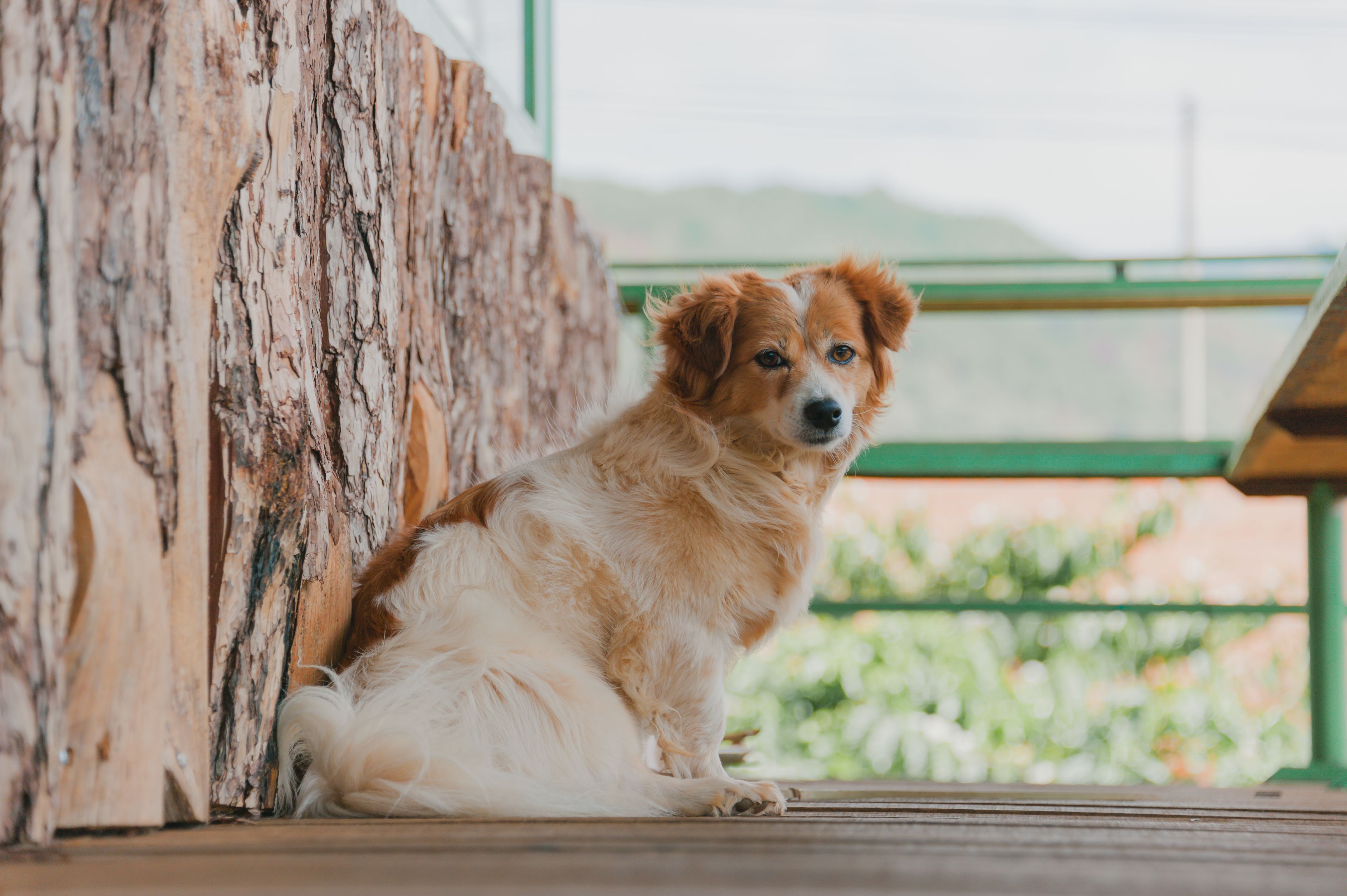
Material choice affects heat, splinters, traction, and how much time you will spend on upkeep. A good starting point is to pick a surface that stays reasonably cool, has a grip that suits your dog’s energy level, and can be sealed or cleaned without harsh chemicals. If you are comparing options, you can review decking products to see how different boards and finishes handle wear.
Keep these points in mind when comparing materials:
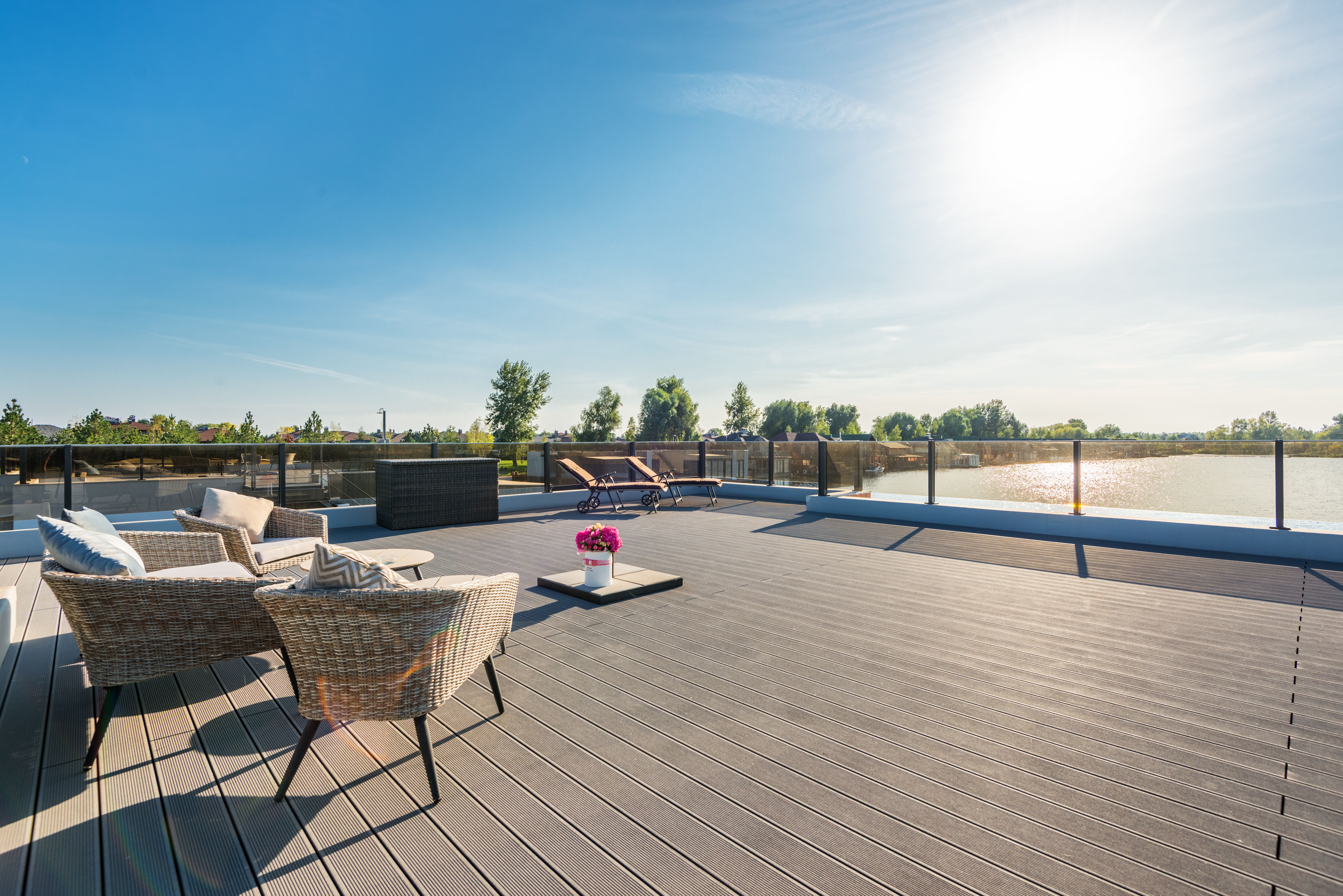
- Color: darker boards absorb more sun and get hotter. Lighter tones and shaded areas help.
- Surface texture: grooved or textured boards give better footing than very smooth finishes, especially for older dogs.
- Splinters: sand and seal natural wood, and check boards regularly for raised fibers or cracks.
- Gaps: board spacing should be tight enough that small paws and toys do not get caught, but wide enough for drainage.
The table below compares common options at a general level. Actual performance depends on climate, sun exposure, and product grade, so check manufacturer specifications before you buy.
Managing Surface Temperature for Paw Safety
Surface heat is one of the most overlooked deck hazards. Boards in full sun can get much hotter than the air around them, and a dog lying on them has no way to move away from the heat through its paws. The ASPCA hot weather safety guidance warns that hot surfaces can burn sensitive paw pads and that dogs close to the ground heat up quickly.
A few practical steps reduce the risk:
- Add shade over the main lounging area with a pergola, awning, or large umbrella.
- Use a simple test: place the back of your hand on the boards for seven seconds. If it is too hot to hold, it is too hot for paws.
- Schedule outdoor time for early morning or evening during summer.
- Keep a cooling mat or a shaded bed on the deck so your dog can choose a cooler spot.
- If your dog walks across the deck to reach grass, consider a removable runner or mat in the sunniest section.
Railings, Stairs, and Escape Routes
Containment is the second major concern. A dog that can fit between balusters or jump over a low rail can fall from a raised deck, and a dog that can slip under a stair skirt can be trapped or injured. Check these details before your dog uses the deck regularly:
- Baluster spacing: gaps should be narrow enough that a dog cannot push its head or body through. Mesh, lattice, or tempered glass panels are common solutions.
- Rail height: measure the height against your dog’s jumping ability, not just local code minimums.
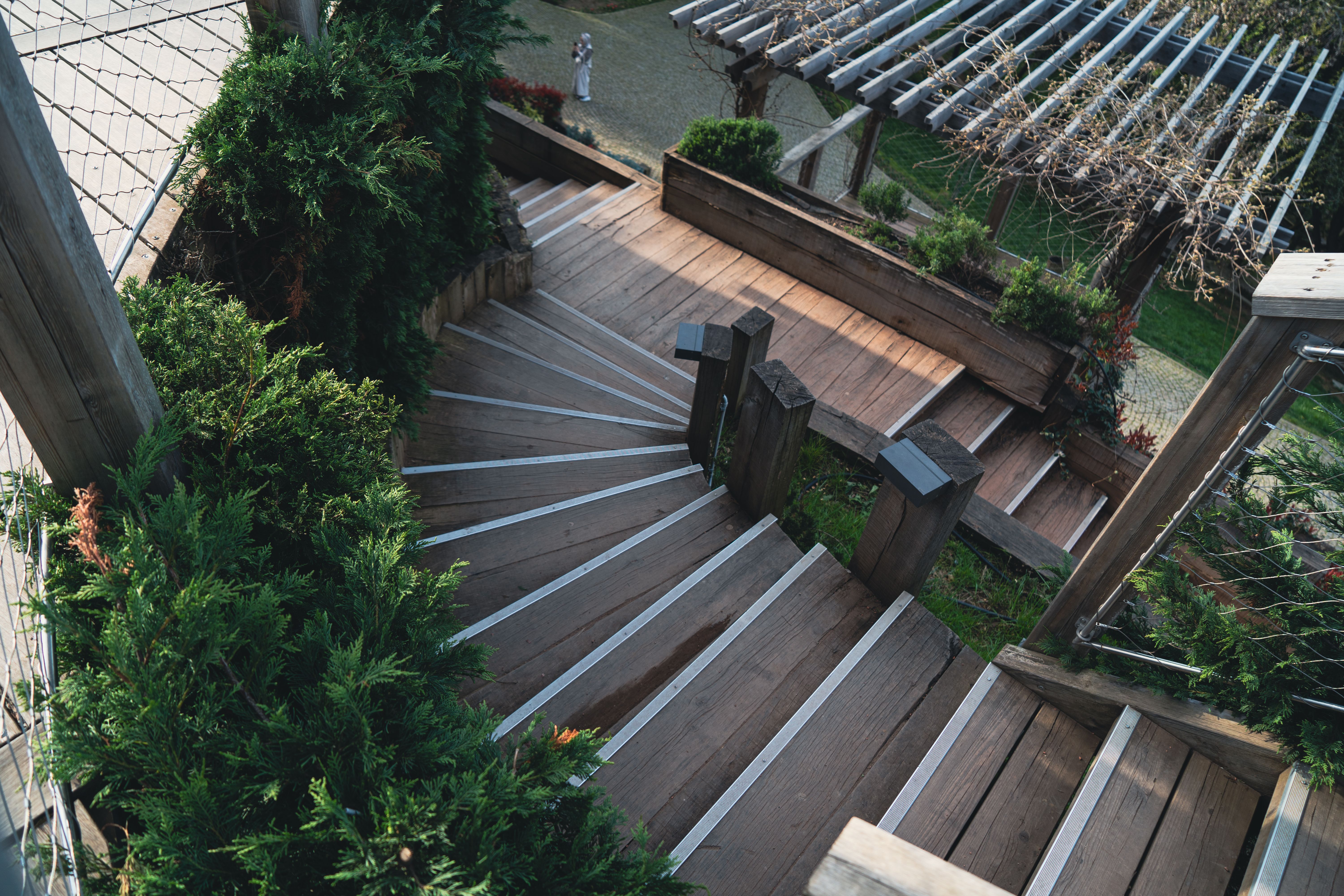
- Stair design: closed risers and sturdy handrails help dogs with mobility issues. Add non-slip treads where boards are smooth.
- Furniture placement: move chairs, planters, and grills away from railings so a dog cannot use them as a launch point.
- Gates: a gate at the top of stairs or at a deck opening keeps puppies and seniors from wandering unsupervised.
Many of these same principles apply to the yard around the deck. The American Kennel Club’s yard safety advice recommends regularly checking fencing and closing gaps that a dog could squeeze or dig through, and the same habit works well for deck perimeters.
Plants, Chemicals, and Other Hazards
The area under and around a deck is often where problems start. Dogs explore gaps, dig at the edges, and chew on whatever they find. Keep these risks in mind:
- Toxic plants: check the species in planters and beds near the deck. Remove any that are harmful, or place them well out of reach.
- Fertilizers and pesticides: keep your dog off treated areas until the products are dry or watered in, as the label directs.
- Grills and fuel: store propane, charcoal, and lighter fluid where a dog cannot reach them.
- Citronella and torches: citronella candles, tiki torch fuel, and mosquito coils can be harmful if chewed or knocked over.
- Gaps and debris: remove leaves, twigs, and food scraps that collect between boards, since they can attract pests and cause stomach upset.
Plants that grow up through deck gaps can also hold moisture and debris, so trim them regularly. Stronger choices include planting along the outside of the deck rather than in the joists.
Building in Shade, Water, and Rest Areas
A dog-friendly deck should give your dog a reason to stay outside without overheating. Plan for these features during the design stage, because they are much harder to add later:
- A covered or shaded zone that stays in the shade for most of the afternoon.
- An outdoor water bowl station that is easy to refill and placed out of direct sun.
- A raised or cushioned bed with a washable cover, placed away from heat sources.
- A corner with enough space for your dog to move around without being stepped on.
Shade can shift as the sun moves across the sky, so check the area at different times of day before finalizing the layout. A spot that is cool at noon may be in full sun by mid-afternoon.
A Simple Maintenance Routine
A safe deck only stays safe if it is checked regularly. A short, consistent routine catches most problems before they become hazards:
- Weekly: sweep debris, check for pet waste and food scraps, and rinse surfaces that collect dirt.
- Monthly: tighten loose screws and brackets, check railings for wobble, and look for protruding nails or splinters.
- Seasonally: clean the boards with a pet-safe deck cleaner, inspect the finish, and reapply sealant or stain where the wood is dry or faded.
- After storms or heat waves: check for debris, loose boards, and standing water, and confirm shade structures are secure.
- Yearly: review stair treads, gates, and fasteners, and replace any damaged boards promptly.
Choose cleaners and sealants labeled as safe for pets, and rinse surfaces well before your dog lies down on them. Ventilate well during application, and keep your dog off the deck until finishes have fully cured.
Frequently Asked Questions
What is the safest deck surface for dogs?
The safest surface depends on your climate and your dog. Lighter, textured boards with good grip and shade over the main area usually work best. Check the surface with the hand test before letting your dog lie on it in full sun.
How wide can railing gaps be for a dog?
Gaps should be narrow enough that your dog cannot push its head or body through. Many owners use mesh, lattice, or clear panels instead of open balusters, especially for small breeds and puppies.
Do I need to seal a wooden deck for my dog?
Sealing or staining protects wood from moisture and UV damage, which helps prevent splinters and cracks. Choose a finish labeled as pet-safe and allow it to cure completely before your dog uses the deck.
What should I do if my dog burns its paws on the deck?
Move your dog off the hot surface to a cool, shaded area and rinse the paws with cool water. Avoid ice or very cold water, and contact your veterinarian for follow-up care, especially if there are blisters, limping, or open wounds.
Keeping the Deck a Place Your Dog Wants to Be
A dog-friendly deck is less about any single feature and more about how the whole space works together. Cool footing, secure railings, clear of hazards, and a comfortable shaded corner will make the deck useful for your dog year-round. Start with the highest-risk areas, such as heat exposure and railing gaps, then add refinements like cushioned beds and better shade over time. Once the basics are in place, a short weekly check will keep the deck safe, and your dog will likely spend more of its time outside with you.