
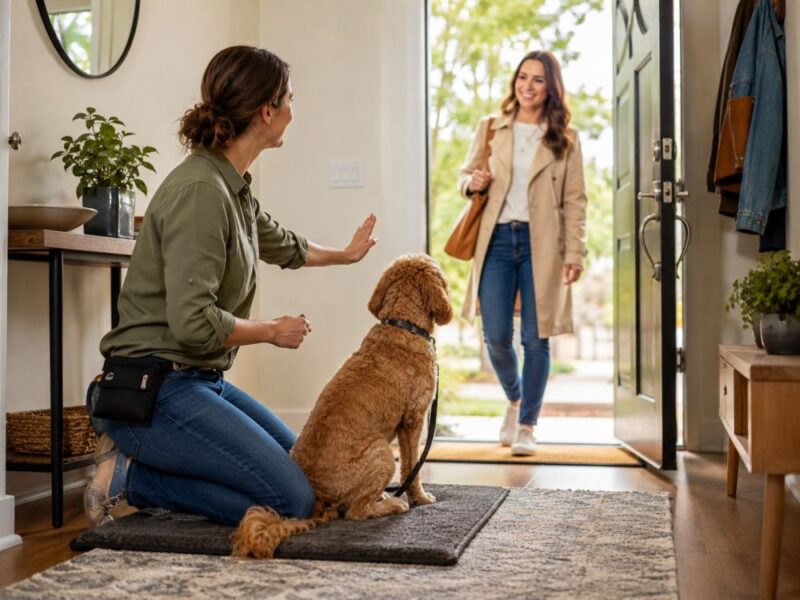
The doorbell rings, and your peaceful home becomes a training challenge. Your dog races toward the entrance, barks over every voice, jumps on the visitor, or slips between your legs as the door opens. Even friendly excitement can make deliveries, gatherings, and ordinary greetings stressful.
These habits are common because the front door predicts something important. Dogs repeat behaviors that bring them closer to the action. Families needing structured help can consult Off Leash K9 Training Denver while building safer, calmer greeting routines.
Decide What You Want Your Dog to Do
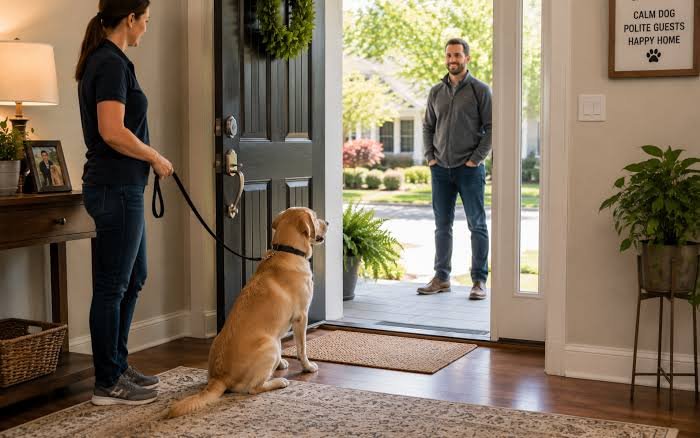
“Stop going crazy” does not tell your dog which behavior will earn success. Choose a clear alternative before practicing.
Your routine might be sitting several feet from the entrance, waiting behind a gate, or remaining on a designated bed until released.
A puppy may begin behind a barrier. An experienced dog may practice an extended place command. The goal should be realistic enough that everyone can follow it consistently.
Teach the Skill Without Real Visitors
Do not wait for an important guest to arrive before beginning. Start when the house is quiet and nobody is outside.
Guide your dog to the chosen spot, mark the correct position, and reward. Release the dog after a few seconds, then repeat. Gradually increase how long your dog stays there while you move around the room.
When your dog understands the location, practice walking toward the door, touching the handle, and opening it slightly. Break the greeting routine into small pieces. Easy rehearsals prepare your dog for harder moments later.
Make the Doorbell Less Exciting
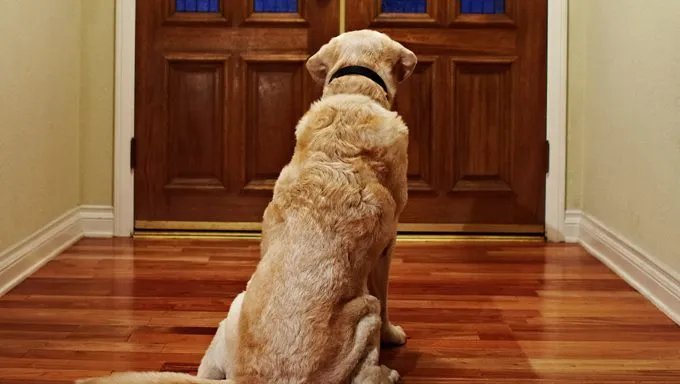
For many dogs, the bell itself triggers barking and rushing. You can change its meaning through planned repetition.
Play a recording of the doorbell quietly. Immediately guide your dog to the selected spot and reward calm behavior. Repeat a few times, then stop before your dog becomes frustrated or overexcited.
Increase the volume gradually across several sessions. Later, ask a family member to press the real bell while you practice. The sound should become a cue to move away from the entrance, not charge toward it.
Use Management While Training Develops
Training takes time, but visitors may arrive today. Management prevents your dog from rehearsing unwanted behavior while the new routine develops.
Keep a leash near the entrance. Use a baby gate, exercise pen, crate, or closed room when necessary. Store treats where adults can reach them quickly. Ask delivery drivers to leave packages outside when direct interaction is unnecessary.
Management is not failure. It protects your guest, your dog, and the training process. Every uncontrolled rush to the door makes the old habit easier to repeat.
Practice With Calm Helpers
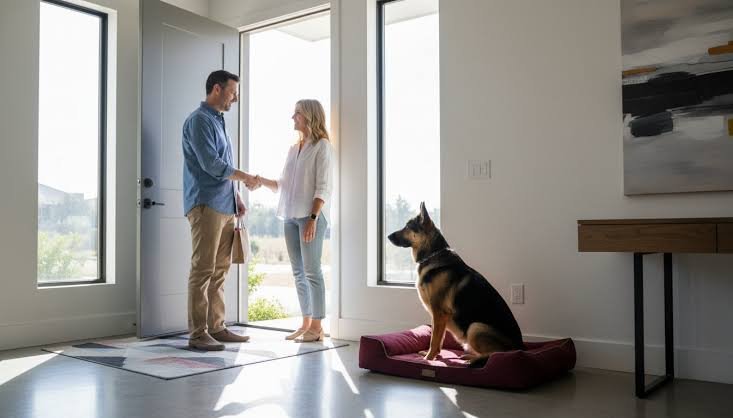
Once your dog follows the routine, invite someone familiar to help. Explain the plan before the person approaches.
Your helper should knock or ring once, then wait. Guide your dog to the designated position and reward several calm seconds. Open the door only as far as your dog can handle. If the dog leaves, close it calmly and reset.
The visitor should avoid staring, reaching, speaking excitedly, or encouraging jumping. Calm entrances make calm behavior easier. Keep sessions short.
Teach Visitors How to Respond
Dogs often jump because jumping earns attention. A guest who pets, laughs, or pushes the dog away may accidentally reward the behavior with interaction.
Ask visitors to turn slightly away and keep their hands still until all four paws remain on the floor. When your dog settles, the visitor can offer quiet attention. If excitement rises again, attention pauses.
Not every dog needs to greet every person. Some dogs are happier observing from a mat, resting behind a gate, or staying in another room. A successful visit is one where everyone feels safe.
Reward Calmness Before Excitement Builds
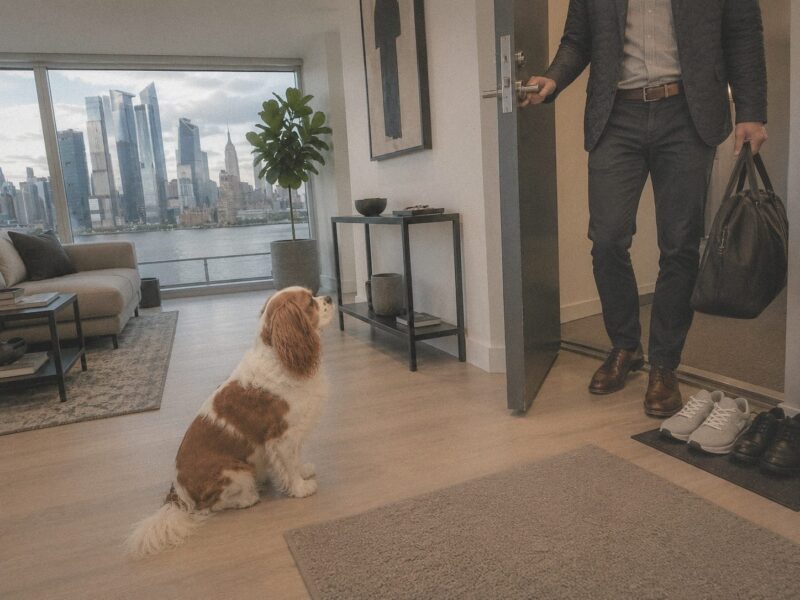
Owners often notice their dog only after barking begins. Look for quieter choices earlier.
Reward your dog for staying on the bed while you pick up keys, walking away from the door after a hallway noise, or looking at you when someone passes outside. These moments teach that calm behavior is valuable even without a formal training session.
Use rewards your dog enjoys. Food may work well, but praise, a chew, access to a favorite room, or permission to greet can also reinforce good decisions.
Prepare for Different Types of Guests
A calm adult visitor is easier than several children arriving together. Delivery workers, technicians, elderly relatives, and guests carrying bags may each create different challenges.
Practice common situations separately. Ask a helper to wear a hat, carry a box, speak at the doorway, or enter with another person. Change one detail at a time so your dog can adapt without becoming overwhelmed.
For large gatherings, use management instead of creating a difficult test. Your dog may benefit from exercise beforehand, a quiet room, familiar bedding, and a safe enrichment activity.
Know When to Seek Professional Help
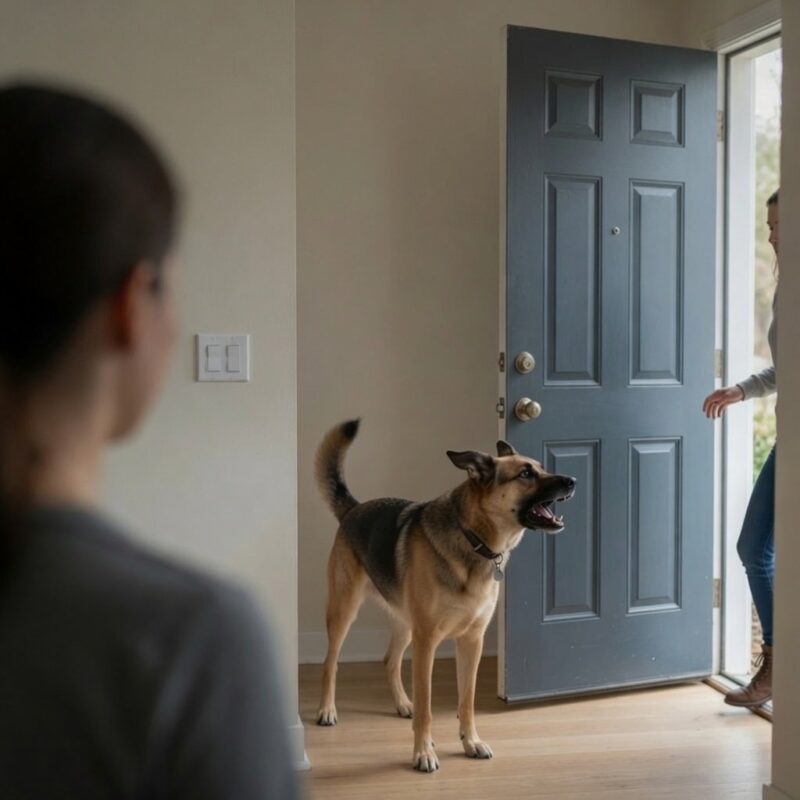
Excited jumping and barking can often improve through consistent practice. Fear, guarding, lunging, snapping, or biting require greater caution.
Do not force a worried dog to interact with visitors. Create distance, use secure barriers, and tell guests not to approach. Sudden behavior changes should also be discussed with a veterinarian, especially when the dog appears painful, confused, or unusually irritable.
Professional guidance can help families identify triggers, improve handling, and create a plan suited to the dog’s behavior and home.
Build a Routine Everyone Can Follow
Door manners improve when every family member uses the same cues, rewards the same behavior, and follows the same safety plan. Post the routine near the entrance if necessary.
Keep sessions brief. Celebrate small wins, such as one quieter bell response, four paws remaining on the floor, or a faster return to the mat. These improvements are meaningful.
Your dog does not need a perfect greeting overnight. Clear expectations, thoughtful management, and successful rehearsals can turn the front door from a daily source of chaos into a calmer part of home life.