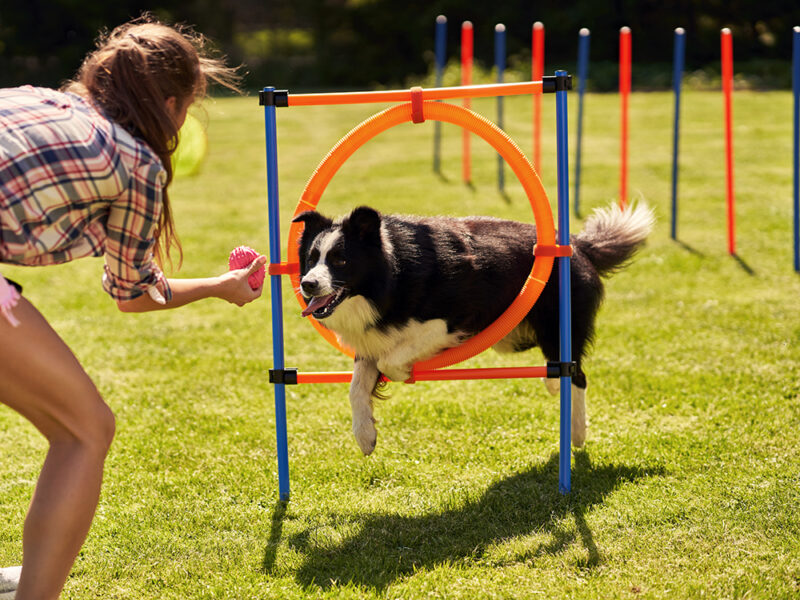
Many dog owners are surprised to learn that agility training began as entertainment during a dog show in the late 1970s. What started as a demonstration quickly became one of the most popular canine sports in the world. Yet you do not need professional equipment or a competition field to begin.
With a few safe obstacles and short practice sessions, agility can easily start in a backyard, driveway, or even a larger living room. The goal is simple. Help your dog move, think, and communicate with you in a fun and structured way.
Agility training at home strengthens coordination, builds confidence, and deepens the connection between dog and owner. The sections below explain how to create a beginner setup and how to guide your dog through a gradual weekly progression that keeps training safe and enjoyable.
What Dog Agility Training Means For Beginners
Dog agility training is a guided activity where a dog moves through a series of obstacles while responding to cues from the handler. These obstacles are designed to test coordination, focus, and communication rather than raw speed.
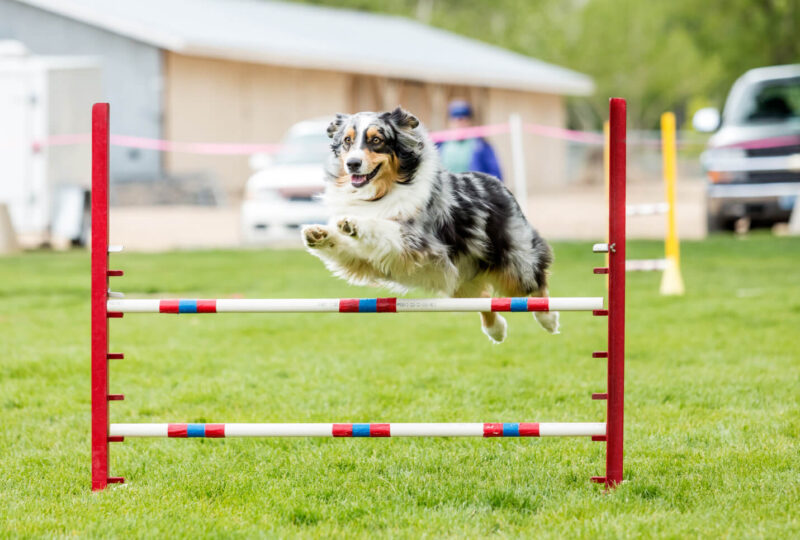
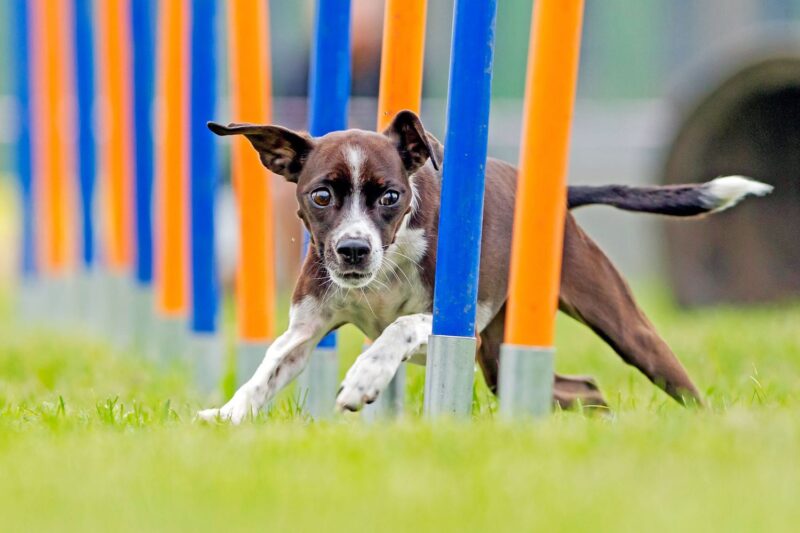
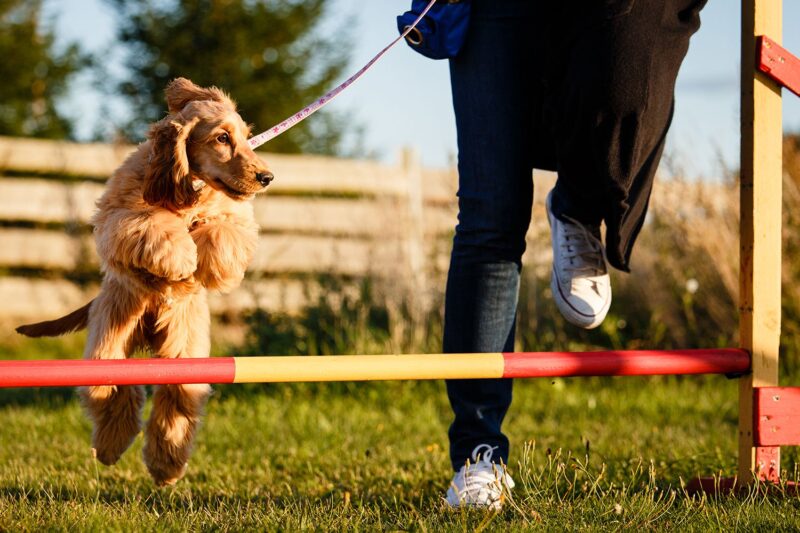
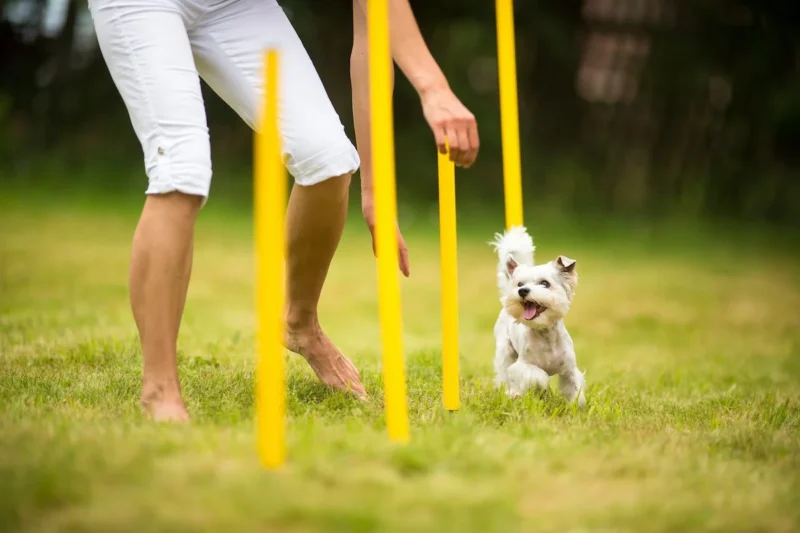
Typical agility obstacles include jumps, tunnels, and weave poles. Each one challenges the dog in a slightly different way. Jumps develop timing, tunnels encourage confidence, and slalom poles build rhythm and concentration.
Agility training at home focuses on learning the basics in a relaxed environment. A backyard setup allows beginners to control the difficulty level and avoid overwhelming the dog.
The most important early goals are:
- building trust between dog and handler
- teaching simple directional cues
- helping the dog approach obstacles with curiosity rather than hesitation
When those foundations are in place, agility quickly becomes one of the most rewarding activities you can share with your dog.
Basic Home Agility Setup For Beginners
Before starting any agility training at home, it helps to understand the role of each obstacle. Even a very small setup can provide a balanced introduction if it includes different types of challenges.
| Obstacle | Purpose | Difficulty |
| Jump | coordination and timing | beginner |
| Tunnel | confidence building | beginner |
| Weave poles | focus and rhythm | intermediate |
| Balance plank | body control | beginner |
A simple layout using two or three obstacles is more than enough for beginners. Many owners begin with a jump and a tunnel placed a few meters apart.
Important note – agility obstacles for beginners should always be lightweight or easy to move. If a dog bumps into them, they should shift or fall safely rather than remain rigid.
You can gradually expand your setup once your dog becomes comfortable moving between obstacles.
Safety Rules For Backyard Agility Training
Safety should always guide agility training at home. Dogs become excited during movement exercises, and simple precautions prevent injuries while maintaining positive learning experiences.
A safe backyard setup should follow a few important principles. Before every session, take a moment to check the training space and equipment.
Key safety practices include:
- placing obstacles on flat ground with good traction
- keeping jumps low during beginner stages
- using stable but lightweight equipment
- allowing warm-up walks before training
Short sessions also reduce the risk of fatigue. Dogs often make mistakes when they become tired, and repeated errors can lead to frustration.
Another helpful rule is to keep the training area free of distractions. Loud noises or moving objects can interrupt the dog’s focus while approaching an obstacle.
Consistency and safety build trust, which is the foundation of successful agility training.
How To Introduce Your Dog To Agility
The first introduction to agility training at home should feel like a game rather than a formal lesson. Dogs respond best when learning sessions remain relaxed and rewarding.
Begin with one obstacle only. Place the obstacle in an open area and encourage the dog to approach it using treats or a favorite toy. Avoid forcing the dog through the obstacle.
Early training should focus on three simple elements:
- encouraging eye contact with the handler
- rewarding small successes immediately
- keeping training sessions between five and ten minutes
Dogs learn through repetition and positive feedback. Each successful attempt helps the dog understand the task more clearly.
Interestingly, many dog trainers also organize training sessions using scheduling tools similar to Crossfit Software. Structured planning helps handlers track progress, rotate exercises, and maintain consistent routines.
While home training remains informal, having a simple routine often improves results and keeps sessions productive.
Weekly Training Progression Plan
Once a dog becomes comfortable with the first obstacle, it helps to follow a gradual progression. A structured timeline prevents rushing and allows the dog to build confidence step by step.
Week 1 to 2: Foundations
Early sessions focus on attention and familiarity.
- basic commands such as sit and come
- guiding the dog over one obstacle
- practicing calm starts and finishes
Dogs at this stage learn that obstacles lead to rewards.
Week 3 to 4: Skill Building
Now a second obstacle can be introduced.
- combining a jump and tunnel
- short sequences of two movements
- encouraging smoother turns
Dogs begin understanding that agility involves moving between obstacles.
Week 5 to 8: Simple Sequences
Training becomes slightly more dynamic.
- two or three obstacles placed in sequence
- practicing consistent pacing
- rewarding controlled movement
Week 9 to 12: Advanced Practice
At this stage, dogs can attempt longer patterns.
- different obstacle arrangements
- improving accuracy
- gradually increasing speed
The dog now understands how to follow the handler’s guidance through multiple obstacles.
Final Thoughts
Agility training at home offers an accessible way to keep dogs physically active and mentally stimulated. A few simple obstacles and consistent short sessions can quickly introduce dogs to the excitement of moving through a course.
As dogs practice jumps, tunnels, and simple sequences, they gradually develop coordination and confidence. Owners often notice improvements in focus and communication as well.
The most successful agility routines share a common trait. They remain positive, patient, and enjoyable for the dog. Progress happens naturally when training feels like a game rather than a task.
With a beginner setup and a steady weekly progression, almost any dog can begin enjoying agility training right at home.